


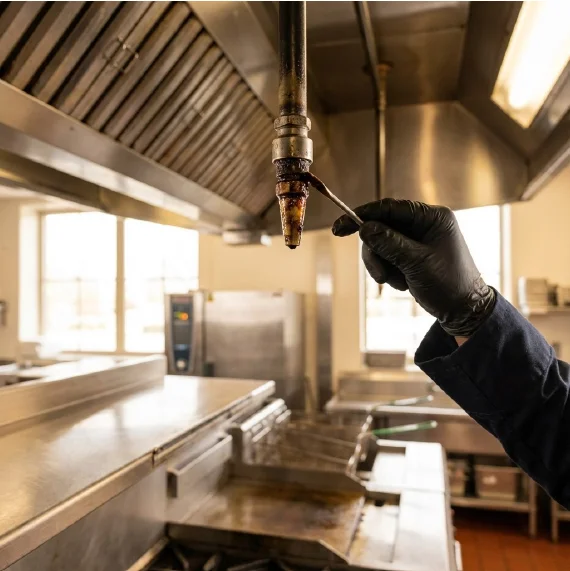
Picture this: it’s a busy Friday night, your kitchen is running at full capacity, and suddenly flames erupt from your fryer. Your fire suppression system activates, but instead of the life-saving chemical spray you expect, only a weak trickle emerges from clogged nozzles. What was supposed to be your last line of defense has become useless: all because of something as seemingly harmless as grease buildup.
This nightmare scenario plays out more often than you might think. Grease accumulation doesn’t just create unsanitary conditions or unpleasant odors; it systematically disables the very equipment designed to protect your kitchen, staff, and business from catastrophic fires. Understanding how this invisible threat undermines your fire suppression systems could mean the difference between a minor incident and a total loss.
The Hidden Saboteur in Your Kitchen
Grease operates like a silent saboteur, infiltrating every corner of your kitchen’s safety infrastructure. As cooking vapors rise from fryers, grills, and sauté pans, they carry microscopic grease particles that settle on surfaces throughout your ventilation and fire suppression systems. Over time, this seemingly insignificant accumulation becomes a deadly coating that can render your entire fire protection system inoperable.
The most critical damage occurs at the fire suppression nozzles: the precision-engineered components that deliver life-saving chemicals during an emergency. When grease coats these nozzles, it doesn’t just slow down the chemical flow; it can completely block it. Imagine trying to drink through a straw that’s been dipped in honey: that’s essentially what happens to your fire suppression system when grease takes over.

But the problem extends far beyond just the nozzles. Grease-laden vapors travel through detection lines, coating sensors that trigger the system activation. When these sensors become compromised, they may fail to detect fires quickly enough, or worse, fail to detect them at all. Meanwhile, grease accumulation in the plenum: the space above your cooking surfaces where vapors collect: can prevent proper chemical distribution patterns, creating dead zones where fires can continue to burn unchecked.
How Fire Suppression Systems Actually Work
To understand why grease is so devastating to fire suppression equipment, you need to know how these systems operate. Modern wet chemical fire suppression systems: the gold standard for commercial kitchens: work through a carefully orchestrated chemical reaction. When activated, they spray specialized chemicals like potassium acetate, potassium carbonate, or potassium citrate that react with burning oils to create a soapy coating. This coating cuts off the fire’s oxygen supply while simultaneously cooling the burning material below its ignition temperature.
The entire process depends on precise chemical delivery and proper coverage patterns. When grease interferes with nozzle function or blocks spray patterns, the chemical can’t reach all areas of the fire. It’s like trying to put out a campfire with a garden hose that has half its holes plugged: some areas might get wet, but others will keep burning.
Advanced systems include self-cleaning capabilities that spray hot water mixed with surfactants during wash cycles. However, even these systems can be overwhelmed by excessive grease build-up, especially in high-volume kitchens where cleaning cycles can’t keep pace with grease accumulation.
The Cascading Consequences
Fire Hazard Multiplication
Grease build-up doesn’t just disable your fire suppression system: it actually increases your fire risk. Accumulated grease acts as additional fuel, turning what might have been a contained incident into a raging inferno. The National Fire Protection Association reports that cooking equipment is responsible for 57% of all restaurant fires, with grease fires representing a major contributor to this statistic.
When grease accumulates in ducts and ventilation systems, it can overheat and ignite, creating secondary fire sources that your compromised suppression system can’t address. The insulating properties of grease also cause electrical components in HVAC systems to overheat, creating multiple ignition points throughout your kitchen infrastructure.
Equipment Destruction and Downtime
Beyond the immediate fire risk, grease build-up systematically destroys your kitchen equipment. Restricted airflow from clogged systems reduces ventilation efficiency by up to 50%, causing equipment to work harder and fail sooner. Overheated exhaust fans seize up, motors burn out, and entire ventilation systems require premature replacement.
The financial impact extends far beyond equipment costs. When your fire suppression system fails an inspection, you face immediate business closure until repairs are completed. The lost revenue during downtime, combined with emergency repair costs and potential insurance claim denials, can cripple even established restaurants.

Regulatory Nightmares and Legal Liability
Fire safety regulations don’t make exceptions for busy kitchens or tight budgets. When inspectors find compromised fire suppression systems, they issue immediate violations that can result in substantial fines or forced closure. More seriously, if a fire occurs and investigators determine that poor maintenance contributed to the severity of the incident, you could face criminal negligence charges and civil liability for injuries or deaths.
Insurance companies are equally unforgiving. Many policies contain specific clauses that void coverage if fire suppression systems aren’t properly maintained. A grease-compromised system that fails during a fire could leave you personally liable for millions in damages.
Why Baffles and Grease Filters Are Your First Line of Defense
Understanding the critical role of baffles and grease filters helps explain why they’re not optional equipment but essential safety components. These devices act as the primary barriers between cooking vapors and your fire suppression system, capturing grease particles before they can infiltrate sensitive equipment.
Baffle Systems: The Grease Interceptors
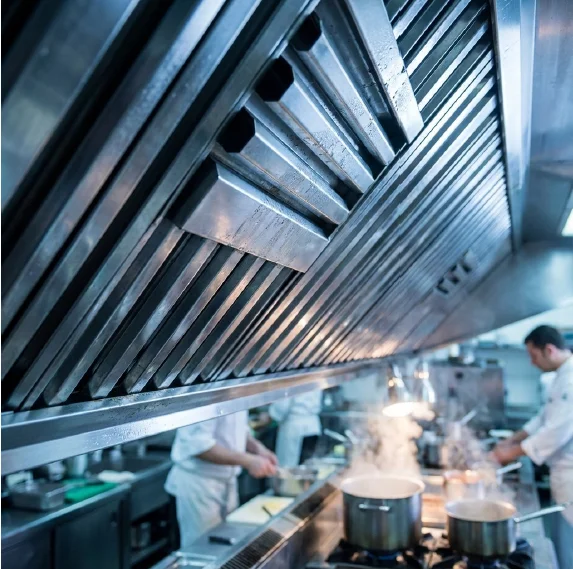
Baffle filters use a series of angled metal channels that force grease-laden air to change direction multiple times. As the air navigates these channels, centrifugal force causes heavier grease particles to separate from the airstream and collect on the baffle surfaces. Think of it as a maze designed specifically to trap grease while allowing clean air to pass through.
Properly functioning baffles can capture 85-95% of grease particles, dramatically reducing the amount that reaches your ductwork and fire suppression components. However, when baffles become overloaded with grease, they lose effectiveness and can actually become fire hazards themselves.
Advanced Filtration Systems
Modern grease filtration goes beyond simple baffles. Multi-stage systems combine mesh pre-filters, baffle stages, and even electrostatic precipitators to achieve near-total grease capture. Some systems include automated washing cycles that clean filters in place, maintaining peak efficiency without requiring manual intervention.
These advanced systems represent a significant upfront investment, but the cost pales in comparison to fire suppression system repairs, equipment replacement, and potential fire damage. More importantly, they provide the consistent protection that keeps your kitchen operating safely and legally.
How Exhaust Fans Suffer From Grease Assault
Your exhaust fans work harder than any other component in your kitchen, moving thousands of cubic feet of grease-laden air every hour. This constant exposure makes them particularly vulnerable to grease-related failures that can cascade through your entire ventilation system.
Mechanical Breakdown Pathways
Grease accumulation on fan blades creates an unbalanced load that causes excessive vibration and bearing wear. As grease builds up, it changes the aerodynamic properties of the blades, reducing airflow efficiency and forcing the motor to work harder. The additional load generates heat that breaks down lubricants and accelerates component wear.
In cold weather, the situation becomes even more critical. Grease that’s liquid in the warm kitchen solidifies when it reaches the cold exterior, creating thick deposits that can completely seize fan mechanisms. Frozen grease mixed with ice can add hundreds of pounds of weight to fan assemblies, causing structural damage to roof-mounted equipment.
Electrical System Compromise
Grease doesn’t just affect mechanical components: it’s equally destructive to electrical systems. Grease deposits on electrical connections create resistance that generates heat, leading to connection failures and potential fires. Motor windings exposed to grease vapors break down faster, and control systems can malfunction when grease interferes with sensors and switches.
The combination of grease and electrical systems is particularly dangerous because grease-coated electrical components can ignite at lower temperatures than normal, creating fire risks even during routine operation.
Protecting Your Investment and Your Life
The solution to grease-related fire suppression failures isn’t complicated, but it requires commitment to regular, professional maintenance. Here’s what effective protection looks like:
Comprehensive Cleaning Programs
Professional kitchen exhaust cleaning services should address every component of your ventilation and fire suppression systems. This includes not just the visible surfaces, but the hidden areas where grease accumulates: inside ductwork, above ceiling tiles, and in fire suppression system components.
High-volume kitchens may require monthly cleaning, while smaller operations might maintain safety with quarterly service. The key is matching your cleaning frequency to your actual grease production, not just following a generic schedule.
Professional Fire Suppression Maintenance
Your fire suppression system requires specialized knowledge and equipment for proper maintenance. Professional technicians don’t just clean nozzles: they test system pressures, verify chemical concentrations, and ensure that every component functions as designed. This level of service requires comprehensive fire safety services that most facilities can’t provide in-house.
Preventive Equipment Upgrades
Consider upgrading to self-cleaning baffle systems or advanced filtration technology that reduces grease accumulation between professional cleanings. While these systems require higher upfront investment, they provide continuous protection that can extend equipment life and reduce maintenance costs over time.
Don’t let grease build-up turn your fire suppression system into a false sense of security. The threat is real, the consequences are severe, and the solution is within reach. Contact Bear Metal Maintenance today to schedule a comprehensive assessment of your kitchen exhaust and fire suppression systems. Your business, your staff, and your peace of mind depend on it.