



Picture this: you’re in the middle of your busiest dinner rush when smoke starts rolling out from under your exhaust hood, grease begins dripping onto your grill, and that acrid smell of burnt oil fills the air. Your kitchen staff is complaining about poor air quality, and you’re worried about fire safety. What went wrong? Often, it comes down to inadequate or poorly maintained baffles and grease filters: the unsung heroes of your kitchen exhaust system.
Every commercial kitchen faces the same fundamental challenge: cooking processes generate enormous amounts of grease-laden vapor, smoke, and airborne particles that must be captured and removed efficiently. Without proper filtration, these contaminants don’t just disappear: they accumulate in your ductwork, coat your exhaust fans, compromise your fire suppression systems, and create serious health and safety hazards.
The Critical Role of Baffles and Grease Filters
Baffles and grease filters serve as your kitchen’s first line of defense against airborne contaminants. These aren’t just simple screens: they’re sophisticated filtration systems designed to capture grease particles before they can travel into your ductwork and exhaust fans.
When cooking vapors hit properly designed baffle filters, they encounter a series of angled metal plates that force the air to change direction multiple times. Due to physics and momentum, heavier grease particles can’t follow these rapid directional changes and instead collide with the baffle surfaces, where they slide down into collection channels. This mechanical separation process can capture between 85-95% of grease particles, making it far more effective than basic mesh filters or no filtration at all.

How Grease Buildup Destroys Exhaust Fans
Your exhaust fans are expensive, powerful pieces of equipment designed to move massive volumes of air. But when grease bypasses your filtration system, it coats everything in its path: including your rooftop exhaust fans.
Motor Strain and Failure Grease accumulation on fan blades creates an imbalance that forces motors to work harder. As grease builds up, it changes the aerodynamic properties of the blades, reducing efficiency and increasing energy consumption. Over time, this extra strain leads to premature motor failure, costly repairs, and unexpected downtime.
Bearing Damage Grease that migrates into fan bearings acts like glue, attracting dust and debris while interfering with proper lubrication. Contaminated bearings generate excess heat, wear unevenly, and ultimately seize: often requiring complete fan replacement.
Belt and Pulley Issues For belt-driven exhaust fans, grease creates slip hazards on pulleys and causes belts to deteriorate rapidly. Greasy belts lose tension, slip during operation, and eventually snap, leaving your kitchen without proper ventilation during critical service periods.
Electrical Component Failure Grease combined with moisture creates conductive paths that can cause electrical shorts, ground faults, and fire hazards. Control panels, switches, and wiring exposed to grease vapors experience accelerated corrosion and failure rates.
Fire Suppression Systems: When Grease Renders Safety Equipment Useless
Your fire suppression system represents a significant investment in protecting your business, staff, and customers. However, grease buildup can render even the most sophisticated systems completely ineffective when you need them most.
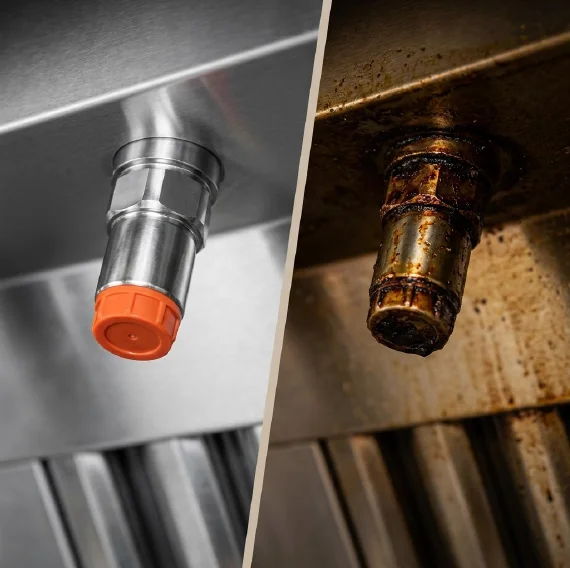
Blocked Nozzles and Distribution Fire suppression systems rely on precise chemical distribution patterns to extinguish grease fires. When grease accumulates on or around discharge nozzles, it alters spray patterns and can completely block chemical flow. During a fire emergency, blocked nozzles mean inadequate suppression coverage, allowing fires to spread unchecked.
Sensor Contamination Modern fire suppression systems use heat and flame sensors to trigger activation. Grease films on sensor surfaces interfere with proper detection, causing delayed activation or preventing the system from triggering at all. Some sensors may also trigger false alarms when grease residue burns or smokes during normal cooking operations.
Chemical Mixing Problems Grease contamination can interfere with the chemical mixing processes in wet chemical suppression systems. When suppression chemicals mix with accumulated grease, they may not achieve the proper consistency or coverage needed for effective fire suppression.
Access Panel Issues Fire suppression systems require regular inspection and maintenance through access panels. When these panels are coated with grease or blocked by accumulated debris, technicians can’t perform necessary checks, leaving potential problems undetected until an emergency occurs.

The Science Behind Effective Grease Capture
Understanding how proper filtration works helps explain why cutting corners on baffles and grease filters is never worth the risk. Effective grease capture relies on several key principles:
Impaction and Interception As grease-laden air flows through baffle filters, larger particles collide with filter surfaces (impaction) while smaller particles get trapped by following airflow patterns that bring them into contact with collection surfaces (interception).
Momentum Separation Heavier grease particles have more momentum than the air carrying them. When forced to change direction rapidly, these particles continue in their original path and separate from the airstream.
Multi-Stage Filtration Professional-grade baffle systems use multiple filtration stages. Initial baffles capture larger droplets and particles, while subsequent stages remove progressively finer contaminants. This staged approach maximizes capture efficiency while maintaining proper airflow rates.
Beyond Fire Safety: Air Quality and Operational Benefits
While fire safety remains the primary concern, proper filtration provides numerous operational advantages that directly impact your bottom line.
Improved Air Quality Clean filtration systems remove smoke, odors, and airborne particles that would otherwise circulate through your kitchen and dining areas. This creates a more comfortable environment for staff and customers while reducing complaints about lingering cooking odors.
Reduced Cleaning Requirements When grease particles are captured at the source, they don’t settle on walls, equipment, and surfaces throughout your kitchen. This dramatically reduces the time and labor required for deep cleaning while maintaining a more professional appearance.
Energy Efficiency Clean filters maintain optimal airflow rates, allowing your exhaust system to operate at peak efficiency. Clogged or inadequate filters force fans to work harder, increasing energy consumption and utility costs.
Equipment Longevity By preventing grease accumulation on expensive kitchen equipment, proper filtration extends the operational life of ovens, grills, fryers, and other cooking appliances. Equipment that stays cleaner requires less maintenance and experiences fewer breakdowns.
Maintenance: Keeping Your Filtration System Effective
Even the best baffle and grease filtration systems require regular maintenance to remain effective. Here’s what you need to know:
Daily Inspections Check filters visually each day for obvious grease accumulation, damage, or displacement. Filters should sit properly in their housings without gaps that allow air to bypass the filtration media.
Regular Cleaning Schedules Most commercial kitchens need filter cleaning every 2-4 weeks, depending on cooking volume and methods. High-volume operations using fryers, grills, and other grease-producing equipment may require weekly cleaning.
Professional Assessment Have your filtration system professionally evaluated quarterly to identify wear, damage, or performance issues. Professional technicians can spot problems before they lead to system failures or safety hazards.
Replacement Timing Baffle filters can last years with proper maintenance, but they eventually require replacement due to wear, warping, or damage. Don’t wait for obvious failure: replace filters when cleaning becomes difficult or ineffective.
Warning Signs Your Filtration System Needs Attention
Several indicators suggest your baffles and grease filters aren’t performing adequately:
- Visible smoke rolling out from under your exhaust hood during normal cooking
- Grease drips from ductwork, fans, or ceiling areas
- Strong odors that persist despite ventilation
- Increased cleaning requirements for kitchen surfaces and equipment
- Staff complaints about poor air quality or respiratory irritation
- Grease accumulation on walls, ceiling, or equipment surfaces
The Cost of Cutting Corners
Some operators attempt to save money by using cheaper mesh filters, extending cleaning intervals, or operating without proper filtration. These shortcuts inevitably cost more in the long run through:
- Equipment failures requiring expensive repairs or replacement
- Fire damage that could have been prevented with proper filtration
- Code violations resulting in fines, forced closures, or insurance issues
- Health department problems due to poor sanitation conditions
- Increased utility costs from inefficient system operation
Professional Installation and Service
While basic filter maintenance can be handled in-house, professional installation and periodic service ensure your filtration system operates at peak performance. Professional technicians understand proper sizing, airflow calculations, and integration with your overall exhaust system.
At Bear Metal Maintenance, we specialize in kitchen exhaust cleaning services that keep your entire system: including baffles and grease filters: operating safely and efficiently. Our comprehensive approach addresses not just cleaning but also system optimization, code compliance, and preventive maintenance.
Don’t wait for smoke in your kitchen or a visit from the fire marshal to address your filtration needs. Proper baffles and grease filters aren’t just regulatory requirements: they’re essential investments in your kitchen’s safety, efficiency, and long-term operational success. Contact our team today to ensure your filtration system provides the protection your business deserves