


Picture this: It’s the middle of January, your kitchen staff is bundling up in extra layers just to work the line, and the back door keeps slamming open every few minutes because it won’t stay closed. Sound familiar? If your commercial kitchen feels more like an arctic tundra than a warm cooking environment,you’re likely dealing with one of the most common: and most misunderstood: winter maintenance issues: improper exhaust and make-up air balance.
While most restaurant owners focus on keeping their dining rooms comfortable, the kitchen often becomes a forgotten battleground against winter’s harsh realities. The problem isn’t just about comfort, though. When your exhaust and make-up air systems aren’t properly balanced, you’re looking at decreased efficiency, unhappy staff, potential safety hazards, and even code compliance issues that could shut you down.
The Over-Exhausting Trap: When More Isn’t Better
Many kitchen managers make the mistake of cranking up their exhaust systems during busy winter periods, thinking more ventilation equals better air quality. In reality, over-exhausting creates a domino effect of problems that can make your kitchen nearly unbearable to work in.
When your exhaust fans pull out more air than your make-up air system can replace, you create negative pressure throughout the space. This imbalance doesn’t just disappear: physics demands that the missing air comes from somewhere. That “somewhere” is typically through every crack, gap, and opening in your building envelope, pulling in frigid outside air that hasn’t been conditioned or filtered.
The immediate consequences of over-exhausting include:
- Doors that won’t stay closed due to pressure differentials fighting against normal operation
- Cold drafts streaming in through unexpected places like electrical outlets, light fixtures, and gaps around equipment
- Uneven temperatures throughout the kitchen, with some areas feeling like walk-in coolers
- Increased utility costs as your heating system works overtime to warm the constant influx of cold air

One restaurant owner in Chicago told us, “We thought our heating system was broken because no matter how high we turned up the thermostat, the kitchen stayed freezing. Turns out, our exhaust system was literally sucking our money out the roof.”
Make-Up Air Systems: The Unsung Heroes of Kitchen Comfort
Your make-up air system is designed to replace the air that your exhaust fans remove, but only when it’s properly maintained and calibrated. Unfortunately, make-up air units often become the “set it and forget it” component of kitchen ventilation: until winter arrives and suddenly everyone notices the problems.
Common make-up air issues that plague commercial kitchens during cold months include:
Shut-Down Units: Some facilities shut down their make-up air systems entirely during winter to “save energy,” not realizing this creates the negative pressure problems we just discussed. This penny-wise, pound-foolish approach typically costs far more in heating bills and staff discomfort than properly operating the system would.
Poor Calibration: Make-up air units that haven’t been serviced or calibrated properly may not be delivering the right volume of air to balance your exhaust. Even a 10-15% imbalance can create noticeable drafts and temperature issues.
Heating Element Problems: Make-up air that isn’t properly heated becomes a constant source of cold drafts. Heating elements can fail, gas lines can have issues, or control systems can malfunction, leaving your kitchen flooded with untempered outside air.
Blocked or Dirty Filters: Clogged filters reduce airflow and force the system to work harder, often leading to inadequate air replacement and uneven heating.
The Ice Factor: When Physics Becomes Your Enemy
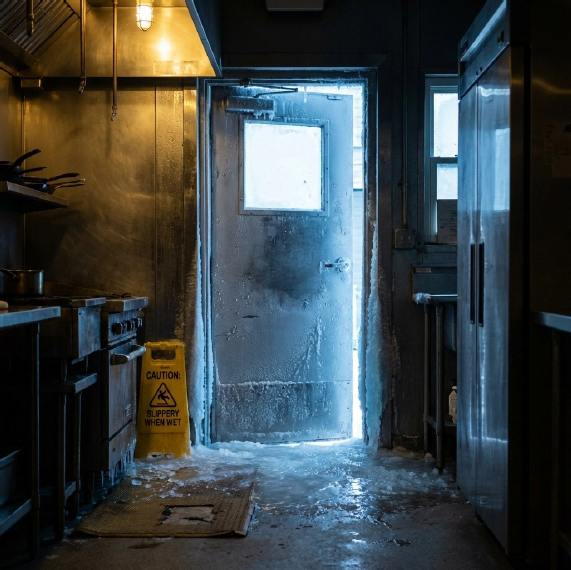
Perhaps the most dangerous consequence of improper air balance is ice formation around doors and entry points. When warm, moist air from your kitchen meets the supercooled air being pulled in through gaps and cracks, condensation forms instantly. In freezing temperatures, this condensation turns to ice, creating slip hazards for your staff and customers.
We’ve seen situations where ice buildup around doors becomes so severe that emergency exits become unusable: a serious safety and code violation that could result in immediate closure by the fire marshal.
The ice formation cycle typically follows this pattern:
- Negative pressure pulls warm, humid kitchen air toward cold entry points
- Temperature differential causes immediate condensation when air masses meet
- Freezing temperatures turn condensation into ice on floors, door frames, and walkways
- Accumulated ice creates safety hazards and can damage door mechanisms

The Comfort-Performance Connection
Beyond the obvious discomfort factor, improperly balanced air systems directly impact your kitchen’s performance and your bottom line. Cold, drafty conditions affect everything from food quality to staff productivity.
Staff Performance Issues: When your kitchen staff is constantly fighting cold drafts and uncomfortable working conditions, productivity drops. Workers move slower, take more breaks, and may even call in sick more frequently. High turnover rates in restaurants often correlate with poor working conditions, and an uncomfortably cold kitchen is a major contributor.
Food Safety Concerns: Temperature fluctuations caused by drafts and air imbalances can affect food holding temperatures, potentially creating food safety risks. Hot holding stations may struggle to maintain proper temperatures when constantly battling cold air currents.
Equipment Efficiency: Your cooking equipment has to work harder when surrounded by cold, drafty air. Fryers take longer to recover temperature, ovens lose heat through constant air infiltration, and steam equipment may not perform optimally.
The Professional Solution: Comprehensive Air Balance Service
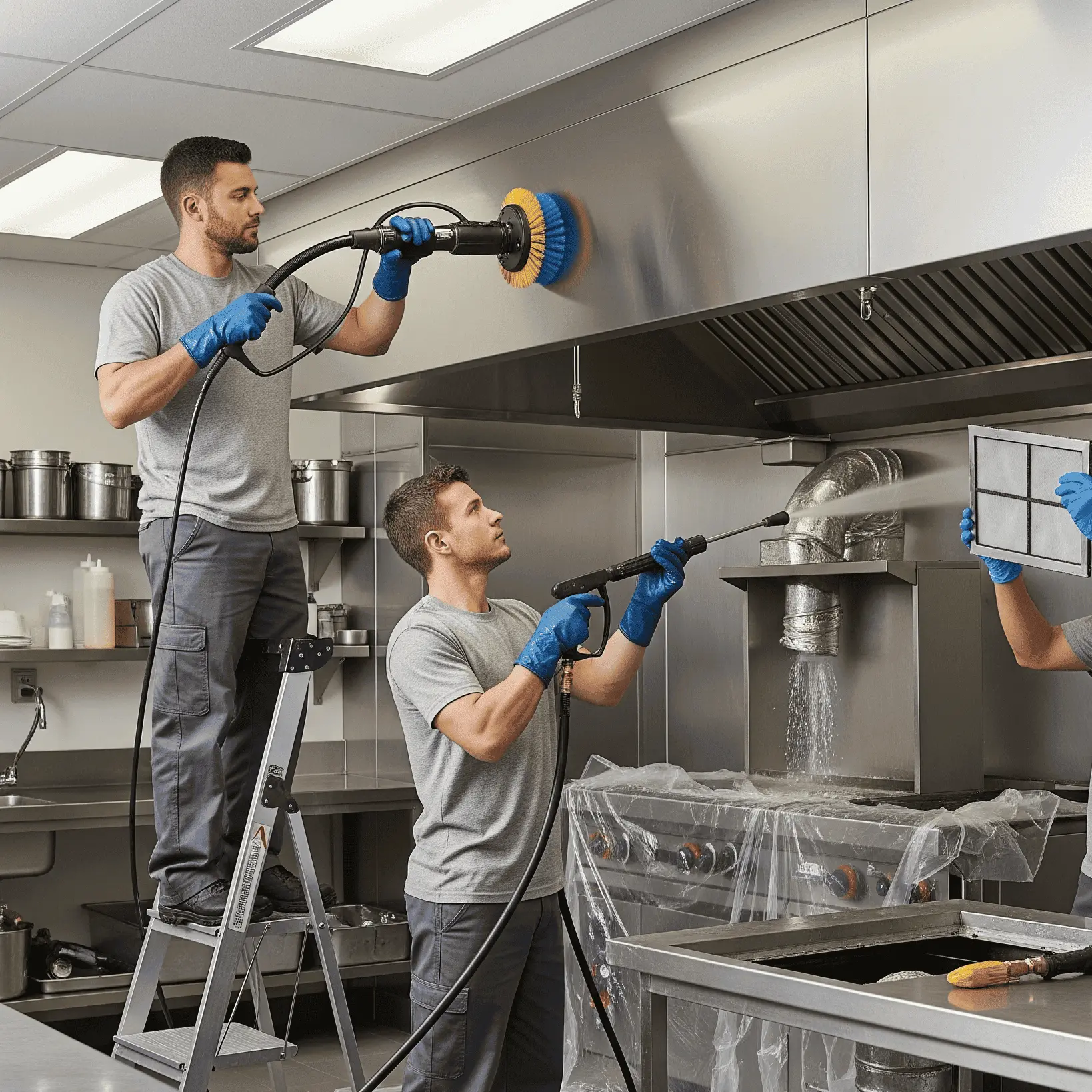
Fixing air balance issues isn’t a DIY project. Professional air balance requires specialized equipment to measure air flows, pressure differentials, and temperature variations throughout your kitchen. At Bear Metal Maintenance, our comprehensive maintenance services include thorough air balance assessments that address both exhaust and make-up air systems.
Our air balance process includes:
- Pressure mapping to identify areas of negative and positive pressure • Airflow measurement at all exhaust and supply points
- Temperature differential analysis to optimize heating system performance
- Equipment calibration to ensure proper operation of both exhaust and make-up air systems
- Seal inspection to identify and address air leakage points
Tuning Your Systems for Winter Success
Proper air balance isn’t about simply matching exhaust and supply air volumes: it’s about creating a controlled environment that maintains comfort while ensuring effective smoke and steam capture. This requires understanding how your specific kitchen layout, equipment load, and operational patterns affect air movement.
Key factors in successful air balance:
Hood Capture Efficiency: Your exhaust system must still effectively capture cooking vapors and grease-laden air, even when balanced with make-up air. This requires precise calculation of capture velocities and proper hood design.
Temperature Control: Make-up air should be heated to within 10-15 degrees of kitchen temperature to prevent thermal shock and drafts. This may require upgrading heating elements or improving insulation around supply ductwork.
Pressure Management: Maintaining a slight negative pressure (typically 0.02-0.05 inches water column) prevents odors from migrating to dining areas while avoiding the extreme negative pressure that causes draft problems.
Zoned Control: Larger kitchens benefit from zoned air balance that can adjust to varying loads in different cooking areas throughout the day.
Prevention Through Professional Maintenance
The best approach to winter air balance problems is prevention through regular maintenance. Our kitchen exhaust cleaning services include air balance verification as part of comprehensive system maintenance.
Regular maintenance prevents:
- Gradual degradation of air balance due to filter loading or equipment wear
- Unexpected failures of heating elements or control systems
- Code violations related to improper ventilation
- Emergency repairs during peak business periods
- Seasonal tune-ups before winter weather arrives allow us to address potential issues before they impact your operation. This proactive approach is always more cost-effective than emergency service calls when your staff is already suffering in uncomfortable conditions.
Taking Action: Don’t Let Winter Win
If your kitchen staff is complaining about drafts, doors won’t stay closed, or you’re seeing ice formation around entrances, don’t wait for the problem to get worse. Air balance issues rarely resolve themselves and typically worsen over time as weather conditions become more extreme.
Contact Bear Metal Maintenance today to schedule a comprehensive air balance assessment. Our experienced technicians can identify the root causes of your comfort problems and implement solutions that will keep your kitchen comfortable, safe, and efficient all winter long. Your staff: and your heating bills: will thank you for taking action before the next arctic blast arrives.