

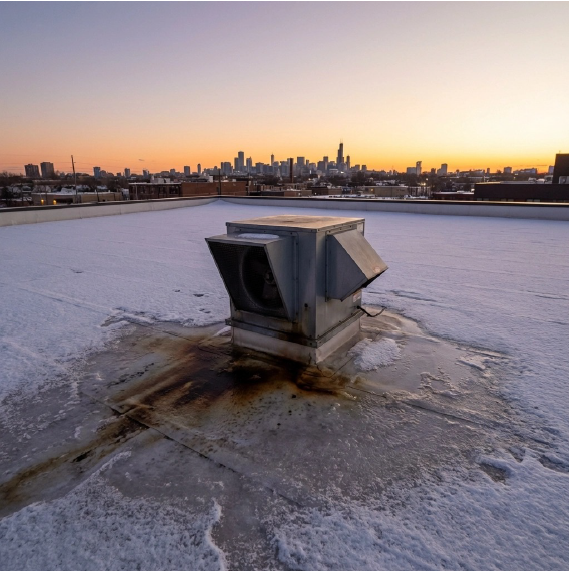
Picture this: It’s February in Chicago, and you’re dealing with yet another complaint about smoke billowing from under your kitchen hood. You climb up to check the rooftop exhaust fan, only to find it barely spinning, surrounded by a treacherous mix of frozen grease, ice patches, and snow that’s turned your roof into a hazardous obstacle course. Welcome to winter’s most expensive kitchen maintenance nightmare.
When temperatures drop and snow starts flying, your commercial kitchen’s exhaust system faces a perfect storm of challenges. The combination of heavy grease loads from busy winter dining, freezing temperatures, and precipitation creates problems that can shut down your operation faster than a health inspector with a clipboard.
Why Winter Weather Turns Your Exhaust Fan Into a Maintenance Nightmare
During winter months, your rooftop exhaust fans work overtime in the harshest conditions. The warm, grease-laden air from your kitchen creates a unique chemistry experiment when it meets freezing temperatures on your roof.
Here’s what happens: As hot, greasy exhaust air travels through your ductwork and exits through the rooftop fan, it encounters sub-freezing temperatures. The grease, which flows easily when warm, begins to congeal and solidify around fan blades, housing components, and ductwork joints. Add snow and ice to this mix, and you’ve got a recipe for mechanical failure.
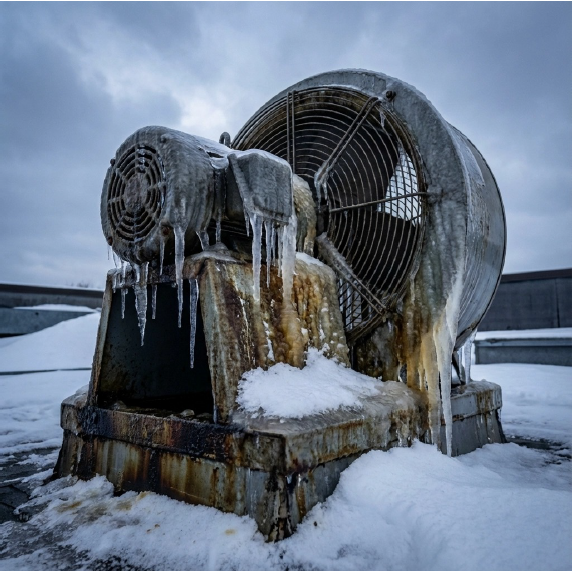
The freezing cycle creates multiple cascading problems:
Seized fan blades – Ice forms around moving parts, causing motors to work harder or fail completely
Blocked exhaust flow – Frozen grease reduces airflow, forcing smoke and heat back into your kitchen
Increased fire risk – Restricted exhaust flow allows grease vapors to accumulate in dangerous concentrations
Equipment damage – Motors burning out from overwork, bearings failing from ice expansion
Your exhaust fan wasn’t designed to be an ice-breaking machine, but that’s exactly what winter conditions demand.
The Hidden Danger: Warm Air Leaks Creating Slip Hazards
One of the most overlooked winter rooftop problems involves warm, grease-laden air leaking from poorly sealed ductwork joints and fan housings. This escaping air doesn’t just disappear: it creates a dangerous cycle that puts your staff and maintenance crews at risk.
When warm exhaust air leaks onto your roof, it melts surrounding snow and ice. But here’s where physics works against you: that melted snow doesn’t just drain away cleanly. Instead, it picks up grease residue from the air and refreezes into slick, treacherous patches that can send someone to the hospital with a single wrong step.
These leak-induced hazards include:
- Invisible ice patches near exhaust fan bases where leaked air refreezes
- Grease-slick walkways leading to and from rooftop equipment
- Blocked roof drains from grease-contaminated ice formations
- Structural water damage when melted snow finds its way into building penetrations
The liability exposure alone should make this a priority issue. One slip-and-fall incident from poor rooftop conditions can cost more than years of proper maintenance combined.
Missing Grease Containment: Your Roof’s Worst Enemy
When hinge kits go missing or grease containment systems fail, winter weather amplifies every problem. Without proper containment, grease doesn’t stay where it belongs: it spreads across your entire rooftop, creating both immediate hazards and long-term structural damage.
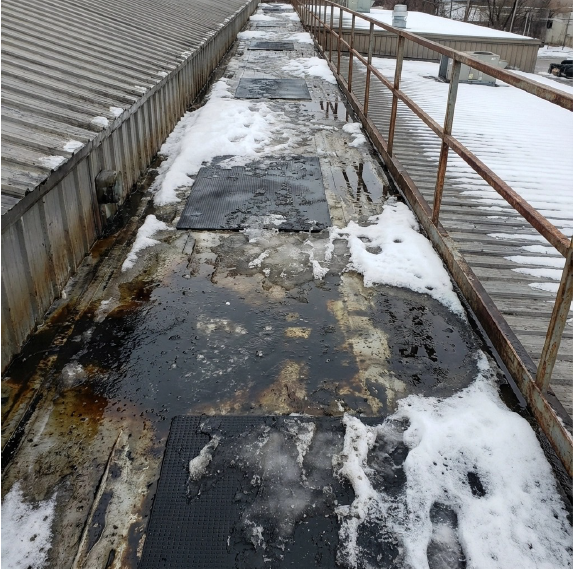
Damaged or missing containment systems cause:
- Roof membrane deterioration – Grease breaks down roofing materials, causing premature failure and costly replacements
- Widespread contamination – Wind and snow spread grease far beyond the exhaust fan area
- Drainage system blockages – Grease clogs roof drains and gutters, leading to ice dam formation
- Code violations – Fire marshals and building inspectors will flag inadequate grease containment
Think of your grease containment system as a levy protecting your roof from a flood. When that protection fails during winter storms, the damage spreads quickly and expensively.
Why Inspectors Focus on Winter Rooftop Conditions
Fire marshals and insurance inspectors know that winter reveals every weakness in your exhaust system maintenance. The combination of heavy use during holiday seasons and harsh weather conditions creates a perfect testing ground for system failures.
During winter inspections, authorities having jurisdiction (AHJ) specifically look for:
Ice Formation Patterns – Unusual ice buildup around exhaust fans indicates air leaks and poor maintenance
Grease Staining – Dark stains on snow reveal grease contamination that might be invisible during warmer months
Mechanical Function – Fans that struggle to operate in cold conditions often have underlying maintenance issues
Safety Access – Icy, grease-slick rooftop conditions create liability concerns and maintenance access problems
“Winter weather doesn’t cause exhaust system problems: it reveals them,” explains one veteran fire inspector. “A properly maintained system handles cold weather without creating ice hazards or grease contamination issues.”
The Professional Solution: Proper Lids, Hinges, and Containment
The good news? These winter rooftop problems are entirely preventable with the right equipment and maintenance approach. Professional-grade containment systems are designed specifically to handle the challenges that winter weather brings.
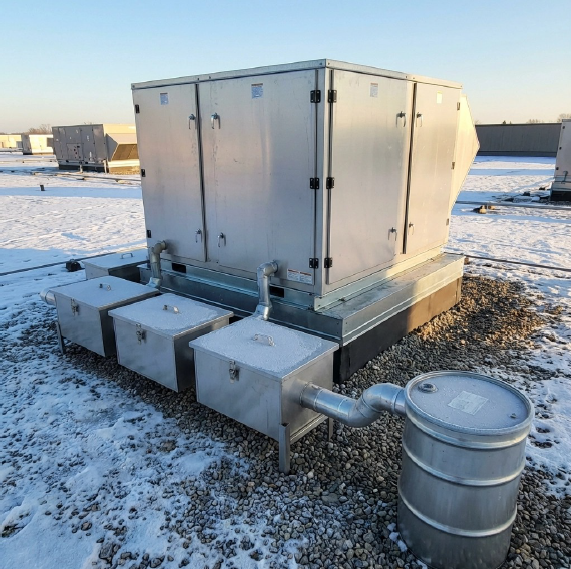
Effective winter-ready containment includes:
- Hinged access lids that seal properly even in freezing conditions
- Insulated grease containment that prevents freezing while maintaining collection efficiency
- Weather-resistant seals that maintain integrity through freeze-thaw cycles
- Proper drainage systems that handle both grease and precipitation without mixing
Professional maintenance schedules also adapt to winter demands:
- Pre-winter system inspections to identify and address potential failure points
- Increased cleaning frequency during heavy-use periods
- Ice prevention treatments for critical moving parts and drainage systems
- Emergency response protocols for weather-related system failures
Protecting Your Investment and Your Operations
Your rooftop exhaust system represents a significant investment, and winter weather can destroy that investment quickly without proper protection. Beyond the immediate operational impacts: like smoke-filled kitchens and unhappy customers: winter rooftop problems create long-term costs that far exceed prevention expenses.
The real costs of winter rooftop neglect include:
- Roof replacement from grease damage and ice-related membrane failure
- Equipment replacement when fans and motors fail from ice damage
- Business interruption during forced closures for emergency repairs
- Insurance claims and potential coverage denials for preventable damage
- Code violations and associated fines from regulatory inspectors
Smart operators understand that winter rooftop maintenance isn’t an expense: it’s insurance against much larger problems.
Professional Winter Maintenance: Your Best Defense
When Bear Metal Maintenance handles your winter rooftop needs, we don’t just clean your exhaust fan and hope for the best. Our winter maintenance approach addresses the unique challenges that snow, ice, and grease create together.
Our comprehensive winter service includes:
- Complete grease containment system inspection and replacement of damaged components
- Weather seal verification to prevent warm air leaks that create ice hazards
- Drainage system clearing to ensure proper water flow away from sensitive equipment
- Ice prevention measures for critical moving parts and access areas
- Documentation and reporting that satisfies insurance and regulatory requirements
Don’t wait for winter weather to reveal problems with your rooftop exhaust system. A proactive maintenance schedule keeps your kitchen operational, your staff safe, and your roof protected from expensive damage.
Ready to protect your operation from winter’s worst rooftop challenges? Contact Bear Metal Maintenance today to schedule your winter-ready exhaust system inspection and maintenance service.
Because when it comes to rooftop safety and system reliability, prevention beats emergency repairs every single time.