

The holiday season leaves more than just empty champagne bottles and confetti in its wake: it leaves your commercial kitchen’s exhaust system loaded with grease like never before. Picture this: three weeks of non-stop turkey frying, prime rib roasting, and endless appetizer preparation, all while winter temperatures outside cause grease to solidify faster than you can say “New Year’s resolution.”
If you’re noticing strange odors, visible grease drips, or smoke that seems to linger longer than usual in your kitchen, you’re experiencing the perfect storm of winter grease buildup. The combination of heavy holiday cooking and cold weather creates conditions that can turn your normally efficient exhaust system into a fire hazard waiting to happen.
Why Winter Creates the Perfect Grease Storm
December through February represents the most challenging time of year for commercial kitchen exhaust systems, and it’s not just because of increased cooking volumes. The science behind winter grease buildup is straightforward but brutal: cold temperatures cause fats, oils, and grease (FOG) to solidify much faster than during warmer months.
When your exhaust system pulls greasy air through ductwork and out to rooftop fans, that grease laden air hits the cold metal surfaces of your ducts and immediately begins to congeal. Instead of flowing smoothly through the system as it would in summer, winter grease sticks to duct walls, accumulates in bends and joints, and creates thick, stubborn deposits that normal cleaning intervals simply can’t keep up with.
The holiday rush compounds this problem exponentially. Your kitchen likely operated at maximum capacity through Thanksgiving, Christmas, and New Year’s: three of the busiest cooking periods of the year. Deep fryers ran continuously, grills stayed hot for extended periods, and every piece of cooking equipment contributed to an unprecedented volume of grease-heavy exhaust.
The Hidden Dangers of Overloaded Systems
When filters and ductwork become overloaded with grease, the consequences extend far beyond aesthetics. Your exhaust system’s primary job is to capture smoke, steam, and grease-laden air before it spreads throughout your kitchen. But when grease buildup restricts airflow, the system can’t perform this critical function effectively.
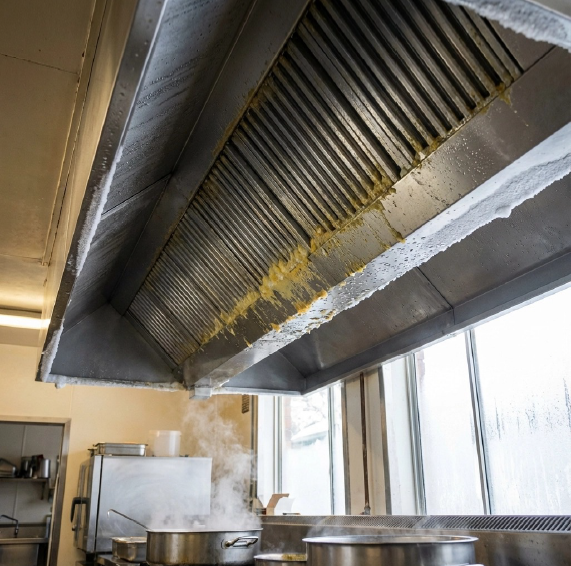
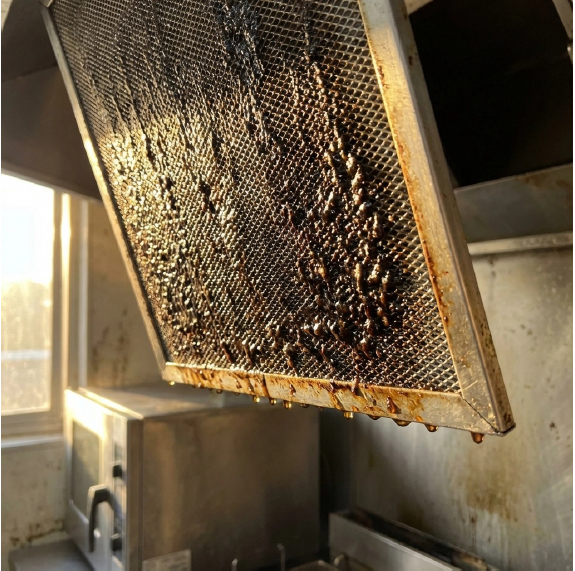
Overloaded filters act like sponges that have reached their saturation point: they can’t absorb any more grease, so excess begins to drip back into your cooking area. This creates slip hazards, unsanitary conditions, and potentially serious fire risks. Grease dripping onto hot surfaces can ignite, and the accumulated grease in your ductwork provides an ideal fuel source for fires to spread rapidly through your entire exhaust system.
The fire risk becomes even more significant when you consider that winter conditions often mean your restaurant’s windows stay closed, trapping heat and reducing natural ventilation. If a grease fire does occur, the combination of overloaded ducts and limited ventilation can turn a small incident into a major emergency.
Beyond fire hazards, overloaded systems create operational problems that affect your kitchen’s efficiency. When exhaust fans can’t move air effectively due to grease buildup, smoke and steam linger in your cooking area, making it uncomfortable for staff and potentially affecting food quality. Your HVAC system may struggle to maintain proper temperature and air quality, leading to increased energy costs and equipment strain.
Warning Signs Your System Needs Immediate Attention
Your kitchen exhaust system communicates its distress through several unmistakable signs. Learning to recognize these warning signals can help you address grease buildup before it becomes dangerous or costly.
Visible Smoke Rolling from Under the Hood
When you notice smoke escaping from the edges of your exhaust hood instead of being captured and removed, your system is telling you it’s overwhelmed. This happens when grease-clogged filters and ducts can’t handle the volume of air they’re supposed to move. The smoke that should be disappearing into your ductwork instead spills into your kitchen, creating an uncomfortable working environment and potentially triggering fire suppression systems.
Grease Drips and Stains
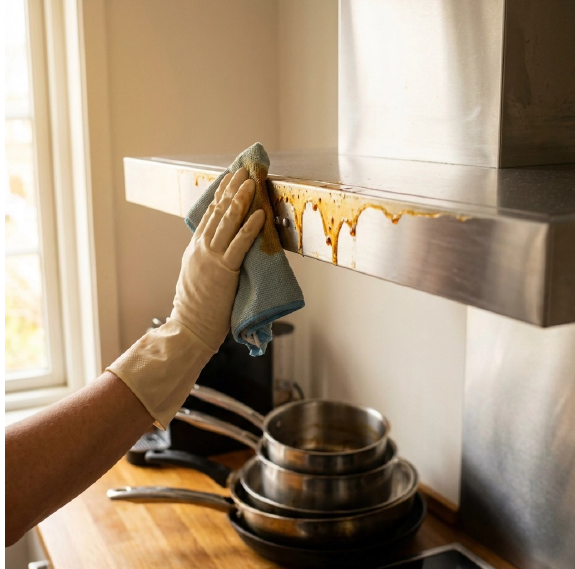
Fresh grease drips from filters, hood edges, or ductwork joints indicate that your system has exceeded its capacity. In winter, you might notice that these drips are thicker and stickier than usual: that’s the cold weather effect in action. Any visible grease accumulation outside of designated collection areas signals that your cleaning schedule needs immediate adjustment.
Strong Burnt-Oil Odors
While some cooking odors are normal in commercial kitchens, persistent burnt-oil smells that seem to linger regardless of what you’re cooking indicate grease burning onto hot surfaces within your exhaust system. These odors often become more noticeable in winter when buildings are sealed against cold air, trapping smells that would normally dissipate.
Reduced Airflow and Poor Ventilation
If your kitchen feels smokier, steamier, or generally less comfortable than usual, grease buildup may be restricting airflow through your system. Staff might complain about the air quality, or you might notice that cooking smoke doesn’t clear as quickly as it should.
The Critical Need for Shortened Cleaning Intervals
Standard cleaning schedules that work perfectly during spring and summer often prove inadequate for winter conditions, especially following the holiday rush. If your kitchen typically operates on quarterly cleanings, winter demands monthly or even bi-weekly attention for heavy-use equipment.
Busy fry kitchens face the greatest challenge during winter months. French fry stations, chicken fryers, and other high-volume frying operations produce enormous amounts of grease-laden exhaust. When this meets cold ductwork, the accumulation happens so rapidly that standard cleaning intervals leave dangerous gaps in protection.
Game day cooking presents similar challenges. Super Bowl Sunday, playoff games, and winter sporting events create mini-holiday rushes throughout the season. Each event loads your system with additional grease just when cold temperatures make that grease most likely to stick and accumulate.
The investment in shortened cleaning intervals pays dividends in multiple ways. More frequent cleanings prevent the deep, stubborn buildup that requires aggressive chemicals and extensive labor to remove.
Regular attention keeps your system operating efficiently, reducing energy costs and extending equipment life. Most importantly, consistent cleaning eliminates the fire hazards that can devastate your business and endanger your staff.
Professional Solutions for Winter Grease Management
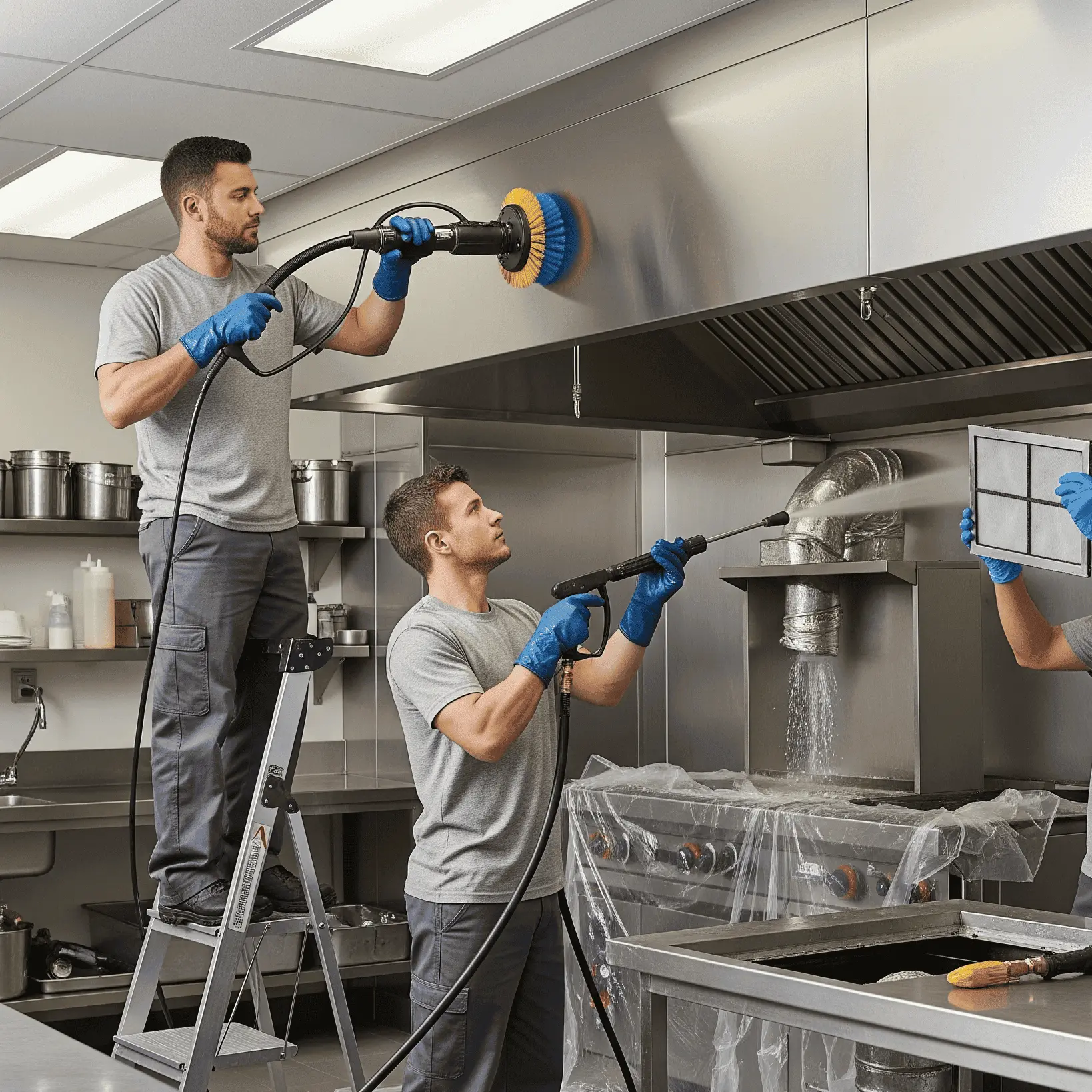
Addressing winter grease buildup requires more than just wiping down visible surfaces. Professional kitchen exhaust cleaning services understand the unique challenges that cold weather and heavy cooking create for commercial ventilation systems.
Comprehensive Duct Inspection and Cleaning
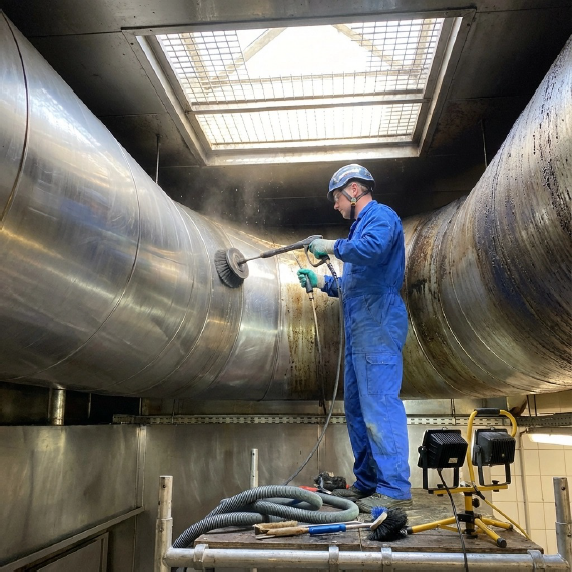
Professional technicians access every part of your exhaust system, from hood filters to rooftop fans. Winter cleaning requires special attention to areas where cold temperatures cause the most severe grease accumulation: typically in unheated sections of ductwork and at connection points where different temperatures meet.
Temperature-Appropriate Cleaning Methods
Cold weather demands different cleaning approaches than summer maintenance. Professional services use heated cleaning solutions and techniques specifically designed to break down solidified grease effectively. This ensures complete removal rather than just surface cleaning that might look good but leave hidden buildup.
Grease Containment System Evaluation
Winter conditions can compromise grease containment systems on rooftops. Professional cleaning includes inspection and maintenance of these systems to prevent grease from spreading across your roof or creating slip hazards around exhaust fan units.
Protecting Your Investment Year-Round
Your kitchen exhaust system represents a significant investment in your restaurant’s safety and efficiency. Winter grease buildup threatens that investment by reducing system performance, increasing fire risk, and potentially causing expensive emergency repairs.
Regular professional maintenance during the challenging winter months protects more than just your exhaust system. Clean, properly functioning ventilation improves working conditions for your staff, reduces insurance liability, and ensures compliance with local fire codes and health regulations. Many insurance policies specifically require documented cleaning schedules for commercial kitchen exhaust systems: falling behind on winter maintenance could jeopardize your coverage at the worst possible time.
The peace of mind that comes with properly maintained exhaust systems allows you to focus on what you do best: serving great food to your customers. When you know your ventilation system can handle whatever your kitchen throws at it, you can operate confidently through the busiest seasons without worrying about smoke, odors, or safety hazards.
Taking Action Before Problems Escalate
Don’t wait for visible problems to develop before addressing winter grease buildup. The most effective approach involves proactive scheduling that anticipates the challenges your system will face during the coldest months of the year.
If you’re already seeing warning signs like smoke spillage, grease drips, or persistent odors, immediate professional attention can prevent these issues from escalating into serious problems. Emergency cleanings cost more than scheduled maintenance, and the longer you wait, the more difficult and expensive the cleaning process becomes.
Contact Bear Metal Maintenance to discuss a winter maintenance schedule that keeps your exhaust system operating safely and efficiently through the most challenging months of the year. Our experienced technicians understand the unique demands that Illinois winters place on commercial kitchen ventilation systems, and we’re equipped to handle everything from routine maintenance to emergency cleanings.
Your kitchen’s safety and your business’s success depend on properly maintained exhaust systems.
Don’t let winter grease buildup put either at risk: schedule your post-holiday cleaning today and establish
a maintenance routine that protects your investment year-round.